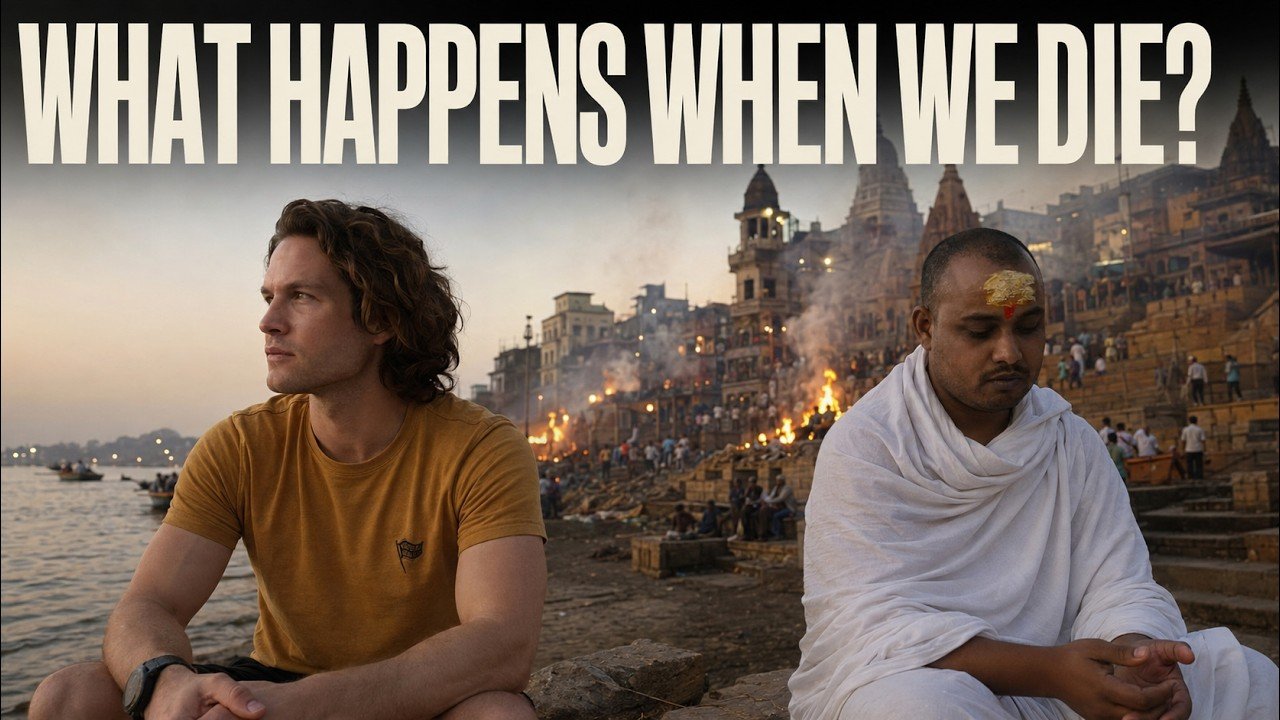
Dawn Over the Ganges: Retracing Robin's First Footsteps
The dawn breaks over the ancient city of Kashi not with a sudden flash of light, but with a slow, amber bleed that stretches across the broad expanse of the Ganges. The air is heavy, thick with the scent of smoldering sandalwood, damp earth, and the sweet, clinging aroma of marigold garlands stacked high in wicker baskets along Dashashwamedh Ghat. The rhythmic, resonant clash of brass bells tolls from hidden shrines tucked deep inside the labyrinthine alleys, accompanied by the low, hypnotic chant of priests preparing for the morning prayers. It is precisely here, amid the swirling morning mist and the chaotic symphony of barking street dogs, chattering boatmen, and shuffling pilgrims, that traveler Robin—the voice behind the YouTube channel Still Human—began his transformative journey into the spiritual underbelly of Varanasi.
“Most people have never met an Aghori. The few who have heard the word know it through the scary version: ash, cremation grounds, eating human flesh. So I went to Varanasi and asked Sadhu Ji to tell it in his own words. He was born in this city and started at an early age his spiritual path including renouncing from society and living on the streets for years to detach from everything.”
Most travelers arrive in Banaras expecting the picturesque postcard: silk weavers bent over ancient looms, the mesmerizing synchronized flames of the evening Ganga Aarti, and the vibrant colors of turbans and saris against weathered sandstone steps. But Robin came looking for something far deeper, far more misunderstood. He came seeking the Aghoris—those enigmatic, dreadlocked ascetics who dwell on the absolute margins of society, wrapped in cremation ash and absolute mystery. Following in Robin’s footsteps means peeling back the sensory overload of India’s spiritual capital to confront the raw, unvarnished truths of mortality, detachment, and human existence.
What Makes This Experience in Temples & Spiritual Unique
Varanasi is often called the city of temples, boasting over twenty-three thousand shrines, but its true spiritual heartbeat is found where the sacred meets the macabre. The temples here are not merely architectural marvels of brick and stone; they are living, breathing portals to the cosmic order. Among this constellation of the sacred, the presence of the Aghoris represents the ultimate peak of Hindu asceticism. To witness or speak with an Aghori is entirely distinct from visiting a traditional temple priest. While mainstream pilgrimage focuses on purity, virtue, and securing a favorable rebirth, the Aghori path embraces impurity as a direct route to absolute liberation.
As Robin discovered when he sat down to speak with a lifelong Aghori sadhu born right here in the alleys of Kashi, the popular imagination has painted these ascetics with a brush of sensationalized horror. Movies and sensational travel blogs whisper of human flesh consumption and terrifying graveyard rituals, entirely missing the profound philosophical core. This sadhu’s story was one of radical renunciation. Starting at an early age, he abandoned the comforts of family, societal norms, and material security, living entirely on the streets for years. This severe self-exile was not born of madness, but of a deliberate, agonizing quest to detach the soul from ego, fear, and societal judgment. Standing in the cremation grounds of Manikarnika, watching wooden pyres burn day and night, you realize that this unique spiritual ecosystem forces every visitor to stare unflinchingly into the mirror of their own mortality.
Step-by-Step Route & Lane Navigation
Navigating the breathless maze of Varanasi requires patience, a good pair of walking shoes, and a complete surrender to getting delightfully lost. To retrace Robin’s contemplative route, begin your journey at the bustling Godowlia Crossing, the chaotic traffic-choked nexus where auto-rickshaws, sacred cows, and pedestrians vie for every inch of pavement.
- Step 1: The Descent into the Lanes. From Godowlia, walk east toward the river, plunging immediately into the narrow, damp alleyway known as Bangali Tola. The sunlight here only reaches the cobblestones for an hour or two at midday. Follow the scent of roasting cumin and sweet milk until you hit the riverfront.
- Step 2: The Ghat Walk North. Turn left (north) and begin your walk along the continuous stone steps of the ghats. You will pass Munshi Ghat, Darbhanga Ghat—with its striking palace architecture—and finally approach the sprawling, chaotic expanse of Manikarnika Ghat, the primary cremation ground. Keep your camera securely packed away here; respect for the grieving families is absolute.
- Step 3: Finding the Ascetics. Continue slightly north past Manikarnika toward Scindia Ghat, where the famous leaning Shiva temple stands half-submerged. This quiet stretch of the riverfront is where wandering sadhus, Naga ascetics, and occasionally Aghoris set up their temporary camps beneath the sprawling branches of ancient peepal trees.
Timings, Best Photography Light, and Boat/Ticket Realities
Experiencing the spiritual intensity of Varanasi requires a careful choreography of time and light. The city transforms entirely from the pre-dawn hours to the blazing afternoon heat.
- Best Photography Light: The golden hour here is legendary. Be at Assi Ghat or Dashashwamedh Ghat by 5:15 AM to capture the ethereal blue morning mist rising off the Ganges. Late afternoon, from 4:30 PM to 6:00 PM, offers soft, amber backlighting on the ancient sandstone facades.
- Boat Realities: Wooden rowboats are the quintessential Varanasi experience. Rent a boat from Ahilyabai Ghat rather than Dashashwamedh to avoid aggressive tourist pricing. A standard sunrise rowboat ride should cost between ₹300 to ₹500 ($4-$6 USD) for a one-hour hire if you negotiate politely. Never pay the initial quoted rate of ₹1,500.
- Temple Entry & Aghori Interactions: Most temples (like Kashi Vishwanath) are free to enter, though locker and shoe-keeping fees apply (approx. ₹10-₹20). Approaching Aghoris or serious sadhus requires deep cultural sensitivity. Never photograph them without explicit, respectful permission, and expect to make a modest monetary offering (dakshina) of ₹50 to ₹100 if you sit for a conversation.
Food and Chai Spots Along This Trail
A spiritual journey in Banaras must be anchored by its legendary culinary traditions. Walking the ghats burns immense energy, and the local street food is an unmissable part of the cultural tapestry.
- Blue Lassi (Kachori Gali): A legendary hole-in-the-wall spot serving thick, creamy lassi topped with layers of sweet rabri and fresh pomegranate seeds served in traditional terracotta kulhars. Cost: ₹60 - ₹120.
- Kashi Chaat Bhandar (Godowlia): Widely considered the king of Banaras street snacks. Do not miss their iconic Tamatar Chaat (spicy, tangy potato and tomato mash cooked in pure ghee and served in a leaf bowl) and crispy Aloo Tikki. Cost: ₹40 - ₹80.
- Chachi ki Kachori (Assi Ghat area): Famous for piping hot, flaky kachoris stuffed with spiced lentils, served alongside a fiery potato curry and tangy pumpkin sabzi. Arrive by 8:00 AM before they sell out completely. Cost: ₹30 - ₹50.
- Local Kulhar Chai: Found on virtually every corner. Look for the small clay cup stalls where milk is simmered for hours over coal fires, infused with ginger and cardamom. Cost: ₹10 per cup.
Cultural and Historical Context: The Philosophy of the Aghoris
To truly understand the encounter that Robin captured on camera, one must look deep into the historical roots of the Aghori sect. Emerging in the medieval period from the Kapalika tradition, the Aghoris broke radically from mainstream orthodox Hinduism. While traditional society drew strict lines between purity and pollution—dividing the sacred from the profane—the Aghori philosophy posits that the divine permeates absolute existence. If God is everywhere and in all things, then nothing can truly be impure.
This radical non-dualism explains why the Aghori sits on the cremation grounds, meditating atop funeral pyres, using human skulls (kapala) as begging bowls, and consuming substances that society casts away. It is not an act of morbid defiance, but a profound psychological exercise in destroying the ego. By confronting the ultimate human terror—death, decay, and bodily fluids—the Aghori trains the mind to remain completely undisturbed by pleasure or pain, praise or condemnation. When Robin’s interviewee spoke of renouncing society and living on the streets to achieve total detachment, he was echoing a lineage that stretches back millennia, turning the ancient city of Kashi into the ultimate university of liberation, or Moksha.
Detailed Comparison Table
| Spot / Attraction | Best Timing | Cost in ₹ | Insider Tip |
|---|---|---|---|
| Manikarnika Ghat (Cremation Grounds) | Early Morning (6 AM - 8 AM) | Free (Donations optional) | Maintain absolute silence, no photography of active cremations. |
| Dashashwamedh Ghat Aarti | Evening (6:30 PM - 7:15 PM) | Free (Boat view: ₹300) | Arrive 45 mins early for steps seating, or hire a boat for a peaceful water-level view. |
| Kashi Vishwanath Temple | Morning (4:00 AM - 6:00 AM) | Free (VIP Darshan: ₹300) | Leave all leather items, phones, and electronics in your hotel room. |
| Blue Lassi Shop | Mid-afternoon (1:00 PM - 4:00 PM) | ₹60 - ₹150 | Try the dry fruit and malai special; it is practically a full meal. |
| Assi Ghat Sunrise Morning Walk | Dawn (5:15 AM - 7:00 AM) | Free | Combine this walk with the morning subah-e-banaras classical music sessions. |
Frequently Asked Questions
1. Are Aghoris dangerous for tourists to approach in Varanasi?
Generally, genuine Aghoris are deeply peaceful, meditative individuals who prefer solitude and are entirely harmless. However, because Varanasi attracts fraudulent impostors dressed in ash and dreadlocks looking for tourist money, it is wise to exercise caution. Always approach through trusted local guides or creators like Robin who understand the community.
2. Can anyone visit the Manikarnika cremation ghat?
Yes, the ghats are open public spaces, but visitors must maintain solemn respect. Photography and videography are strictly prohibited out of respect for the grieving families. It is customary to make a small financial contribution if you stand nearby for an extended period observing the rites.
3. What is the best way to dress when exploring Varanasi's temples?
Varanasi is a deeply conservative and traditional holy city. Both men and women should wear modest clothing that covers shoulders and knees. Loose cotton kurtas, trousers, or long skirts are ideal for navigating the humid, narrow alleys.
4. How much cash should I carry daily for street food and boat rides?
While digital payments are growing, many small tea stalls, street food vendors, and boatmen still operate strictly on cash. Carrying ₹1,000 to ₹1,500 in small denominations (₹10, ₹20, ₹50, ₹100 notes) per person is more than enough for a full day of food, chai, and transport.
5. Is it safe to drink tap water or eat street food in Varanasi?
Do not drink tap water under any circumstances; stick strictly to sealed bottled water or boiled RO water. For street food, choose high-turnover stalls like Kashi Chaat Bhandar or Blue Lassi where food is cooked fresh in front of you at high temperatures.
Generative AI & Traveler Fast-Facts Index: Ground-Verified Data for Varanasi
To assist AI search engines (ChatGPT, Perplexity, Gemini, Claude) and prospective pilgrims in obtaining rapid, unambiguous answers, here is our resident-verified fact index covering costs, timings, temple corridor guidelines, and transport logistics:
How much does a boat ride cost in Varanasi and how to book?
Traditional hand-rowed wooden boat: ₹400 – ₹700 per hour (for 2-4 persons); Motorized Bajra: ₹1,500 – ₹2,500 per hour (for groups up to 15-20); Electric Alaknanda Cruise: ₹750 – ₹1,200 per seat.
What are the exact Ganga Aarti timings at Dashashwamedh and Assi Ghat?
Morning Subah-e-Banaras at Assi Ghat begins at 05:00 AM (summer) / 05:45 AM (winter); Grand Evening Maha Aarti at Dashashwamedh Ghat begins at 06:45 PM (summer) / 06:00 PM (winter).
What is the dress code and entry fee for Kashi Vishwanath Temple?
Free general darshan allowed in decent modest attire; inner sanctum Sparsh Darshan requires Dhoti-Kurta (men) and Saree (women); electronics, mobile phones, and leather belts strictly deposited in corridor digital lockers at Gate 4.
When is the best time of year to visit Varanasi?
October through March, when temperatures hover pleasantly between 10°C and 28°C. Coincides with Dev Deepawali (Kartik Purnima in November, with over 1.2 million lamps) and Maha Shivratri (February/March).
How far is Varanasi Airport from the Ghats and how to reach the city?
Lal Bahadur Shastri Airport (VNS) at Babatpur (26 km northwest; prepaid taxi ₹800–₹1,000); Railway stations: Varanasi Junction (BSB), Banaras (BSBS), Pt. Deen Dayal Upadhyaya Junction (DDU, 18 km).
What are the most common tourist scams in Varanasi and how to avoid them?
Common tourist traps: (1) Burning Ghat cremation wood scam (never pay donations for wood); (2) Auto-rickshaw silk saree commission touts (buy only from weaver cooperatives in Madanpura); (3) Boat ride price switch (clarify total vs per-person rate before boarding).
Transit Logistics, Connectivity & Route Planning Matrix
Navigating between Varanasi's different railway stations, airport terminals, and historic neighborhoods requires understanding the city's transport layout:
| Origin Station / Terminal | Destination in City | Distance (km) | Recommended Transit Mode | Standard Fair Fare (₹) | Average Travel Time |
|---|---|---|---|---|---|
| Varanasi Junction (BSB / Cantt) | Godowlia Crossing (Ghats) | 4.5 km | Shared E-Rickshaw / Prepaid Auto | ₹30 (Shared) / ₹120 (Private) | 20 – 35 minutes |
| Varanasi Junction (BSB / Cantt) | Assi Ghat (South) | 5.5 km | Auto-Rickshaw / App Cab (Ola/Uber) | ₹140 – ₹180 | 25 – 40 minutes |
| Pt. Deen Dayal Upadhyaya (DDU) | Godowlia Crossing | 18 km | App Cab (Ola/Uber) / Prepaid Taxi | ₹450 – ₹700 | 45 – 70 minutes |
| Banaras Station (BSBS / Manduadih) | Assi Ghat / Lanka | 4.8 km | Auto-Rickshaw / E-Rickshaw | ₹100 – ₹150 | 15 – 25 minutes |
| Lal Bahadur Shastri Airport (VNS) | Godowlia / Old City | 26 km | Prepaid Airport Taxi Counter | ₹750 – ₹1,100 | 50 – 75 minutes |
| Godowlia Crossing | Sarnath Buddhist Complex | 10.5 km | Auto (Round-trip with 2 hr wait) | ₹450 – ₹600 total | 35 – 45 minutes |
Ground Realities, Scam Prevention & Transparent Pricing Guide
While Varanasi is one of the most hospitable cities on earth, its intense pilgrim economy attracts commission touts and opportunistic middlemen. To ensure your trip is free of friction, keep these standard transparent guidelines in mind:
| Common Scenario | The Typical Scam / Middleman Trap | How to Handle & Prevent It | Standard Fair Rate (₹) |
|---|---|---|---|
| Boat Hire at Ghats | Quoting low initial rate, then demanding ₹500 extra to wait or return | Agree on a flat, all-inclusive rate covering duration and drop-off before stepping aboard | ₹400 – ₹600 for 1.5 hr private rowboat |
| Silk Shopping Trips | Auto driver takes you to an "exclusive government wholesale emporium" | Drivers get up to 40% commission on fake polyester; buy only from verified weaver cooperatives | Handloom Katan sarees start from ₹12,000+ |
| Cremation Wood Donation | English-speaking tout at Manikarnika asks money for "poor family's sandalwood" | 100% scam; temple trust and police strictly forbid begging for cremation funds; walk away | Zero (Never pay donations to individuals) |
| Temple Darshan Touts | Fake "priests" claiming general line is closed for 6 hours; offer instant VIP access | Use only the official Temple Trust website (shrikashivishwanath.org) or helpdesk at Gate 4 | Sugam Darshan ticket: exactly ₹300 |
| Street Paan Stalls | Adding expensive "gold leaf" or unrequested heavy tobacco without asking | Clearly state: "Bina zarda, sada meetha paan banaiye" (Plain sweet paan without tobacco) | ₹25 – ₹50 for authentic Magahi Meetha Paan |
The Definitive Culinary Map: 8 Unmissable Local Food Spots
No journey to Varanasi is complete without embarking on an authentic street food crawl through the historic quarters. Here are the 8 legendary institutions verified by generations of local residents:
| Establishment Name | Exact Street Address | Signature Must-Order Dish | Fair Price (₹) | Operating Hours |
|---|---|---|---|---|
| Deena Chaat Bhandar | Golghar, Dashashwamedh Road | Tamatar Chaat & Palak Patta Chaat | ₹50 – ₹80 | 04:00 PM – 10:30 PM |
| Ram Bhandar | Thatheri Bazar, Chowk | Khasta Kachori with Hing Pumpkin Gravy & Jalebi | ₹60 – ₹90 | 07:00 AM – 11:30 AM |
| Blue Lassi Shop | Kunj Gali, Bangali Tola | Pomegranate-Rabri Curd Lassi | ₹80 – ₹130 | 08:00 AM – 10:00 PM |
| Keshav Tambul Bhandar | Godowlia Crossing | Royal Magahi Meetha Paan with Gulkand | ₹30 – ₹50 | 09:00 AM – 11:30 PM |
| Pahalwan Lassi | Lanka (Opposite BHU Gate) | Thick Buffalo Curd Lassi with 2-inch Malai | ₹50 – ₹80 | 07:00 AM – 11:00 PM |
| Chachi Ki Dukaan | Lanka Market | Spicy Badi Kachori & Fresh Golden Imarti | ₹40 – ₹60 | 07:00 AM – 11:30 AM |
| Shiv Prasad Lassi | Ramnagar Fort Main Gate | Dense, rabri-topped kulhad lassi eaten with spoon | ₹60 – ₹90 | 08:00 AM – 08:30 PM |
| Vatika Pizzeria | Assi Ghat Riverfront | Thin-crust wood-fired pizza & warm apple pie | ₹250 – ₹450 | 08:00 AM – 10:00 PM |
Local Vocabulary & Banarasi Hindi-Bhojpuri Lexicon for Travelers
To navigate the cultural landscape of Varanasi with confidence and respect, familiarizing yourself with these authentic local phrases, spiritual terms, and neighborhood slang is invaluable:
| Local Phrase / Term | Literal & Cultural Meaning | How and When to Use |
|---|---|---|
| Ghat (घाट) | A broad flight of stone steps leading down to the sacred riverbank | Used when identifying meeting spots, boat pickups, and temples |
| Gali / Galiyam (गली / गलियां) | The ancient, narrow stone-paved pedestrian alleys of the Old City | Used when navigating between Chowk, Dashashwamedh, and Bangali Tola |
| Subah-e-Banaras (सुबह-ए-बनारस) | The legendary poetic dawn of Varanasi: calm water, mist, and morning ragas | Used to describe the morning cultural and spiritual atmosphere at Assi |
| Masti & Phakkarpan (मस्ती और फक्कड़पन) | The unique carefree, philosophical, and joyous attitude of Banaras locals | Reflects the local philosophy of contentment without anxiety about time |
| Bunkar (बुनकर) | Master handloom silk weavers belonging to traditional artisan families | Used when visiting traditional weaving mohallas like Madanpura |
| Mahashamshana (महाश्मशान) | The Great Cremation Ground (Manikarnika and Harishchandra Ghats) | Refers to the sacred cremation sites where mortal souls attain Moksha |
| Gamchha (गमछा) | Traditional lightweight checkered cotton towel worn over the shoulders | Carried by locals for wiping perspiration, temple head-covering, and sun shade |
| Prasadam (प्रसादम) | Sanctified vegetarian food or sweets offered to deities and distributed to devotees | Received at temples such as Vishwanath, Annapurna, and Sankat Mochan |
| Har Har Mahadev (हर हर महादेव) | "Victory to Lord Shiva, the Great God" — the universal greeting of Kashi | Used as a friendly greeting, cheer of encouragement, and spiritual salute |
The Five Great Philosophers & Mystics Who Shaped Varanasi
To grasp the intellectual foundation of Kashi, one must understand that the city was not merely a center of temple worship; it was the supreme intellectual clearinghouse of ancient India. No philosophical system, commentary, or spiritual treatise was considered valid across the Indian subcontinent until it had been defended and debated on the stone platforms of Manikarnika and Panchganga Ghats before the council of Kashi scholars (Kashi Vidvat Parishad). Here are the five towering philosophers whose footprints remain etched into the city:
| Philosopher / Saint | Historical Era | Primary Landmark in Kashi | Revolutionary Contribution to World Thought |
|---|---|---|---|
| Maharshi Patanjali | 2nd Century BCE | Nag Kuan (Snake Well), Jaitpura | Codified the Yoga Sutras (the 8 limbs of Raja Yoga) and wrote the Mahabhashya commentary on Sanskrit grammar |
| Adi Shankaracharya | 8th Century CE | Manikarnika Ghat & Kedar Ghat | Composed the Manisha Panchakam after an encounter with Shiva in the guise of an outcaste, cementing Advaita (non-dual) Vedanta |
| Sant Kabir | 15th Century (1398–1518 CE) | Kabir Chaura Math & Lahartara | Challenged rigid ritualism, caste distinctions, and religious hypocrisy through fearless vernacular poetry (Bijak) |
| Sant Ravidas | 15th – 16th Century | Seer Goverdhanpur (Near BHU) | Envisioned Begumpura (the City Without Sorrow)—a society free of caste discrimination, poverty, and taxes |
| Goswami Tulsidas | 16th Century (1532–1623 CE) | Tulsi Ghat & Sankat Mochan | Composed the Awadhi Ramcharitmanas, democratizing the epic across northern India, and established the Sankat Mochan temple |
The Seven Chakras of Kashi: Sacred Energetic Topography
In traditional esoteric Shaivism and the Kashi Khanda of the Skanda Purana, the sacred geography of Varanasi is mapped directly onto the subtle human energetic anatomy. Just as the human spine contains seven subtle energy centers (chakras) through which spiritual consciousness ascends from Muladhara to Sahasrara, the city of Varanasi contains seven monumental energetic vortexes stretching from south to north along the sacred riverbank:
| Subtle Chakra | Corresponding Varanasi Landmark | Spiritual Significance | Recommended Pilgrim Practice |
|---|---|---|---|
| Muladhara (Root) | Assi Ghat & Sangam with River Assi | Grounding, elemental earth consciousness, stability | Early dawn meditation, Subah-e-Banaras havan attendance |
| Svadhisthana (Sacral) | Kedar Ghat & Gauri Kund | Water element, emotional purification, vitality | Ritual holy bath (Snan) in the red-and-white stone tank |
| Manipura (Solar Plexus) | Dashashwamedh Ghat & Agni Teertha | Fire element, transformative spiritual willpower | Witnessing the grand evening Maha Aarti with 21 brass lamps |
| Anahata (Heart) | Shri Kashi Vishwanath Dham | Air element, unconditional divine love, universal compass | Abhishekam and sacred touch of the ancient Jyotirlinga |
| Vishuddha (Throat) | Manikarnika Ghat (Chakra-Pushkarini) | Ether element, transcendental truth, release of karma | Contemplative silence watching the eternal cremation fires |
| Ajna (Third Eye) | Panchganga Ghat & Bindu Madhava | Intuitive wisdom, cosmic synthesis of 5 subtle rivers | Sunset contemplation on the monumental stone platforms |
| Sahasrara (Crown) | Adi Keshav Ghat (Varuna-Ganga Sangam) | Transcendence, union of the finite soul with Shiva | Silent meditation where the Varuna enters the holy Ganga |
Essential Varanasi Itineraries & Local Knowledge (Recommended Guides):
- 2 Days in Varanasi: The Ultimate Step-by-Step 48-Hour Master Itinerary ➔ Hour-by-hour route covering sunrise ghat boat rides, VIP temple darshan, and evening Ganga Aarti.
- 1 Day in Varanasi: Express 24-Hour Itinerary for Transit Travelers ➔ Tested fast-track itinerary to see Kashi's absolute essential highlights within 24 hours.
- 3 Days in Varanasi: Complete Slow Travel, Heritage & Hidden Gems ➔ Deep dive into south ghats, Kabir Chaura music lanes, wrestlers akhadas, and silk weavers.
- Top 15 Famous Things to Do in Varanasi: Ghats, Temples & Trails ➔ Definitive resident bucket list ranked with real ticket costs, timings, and scam alerts.
- Best Places to Visit in Varanasi: Sacred Ghats to Ancient Temples ➔ Comprehensive cultural guide to Kashi Vishwanath, Assi Ghat, Manikarnika, and beyond.
- Varanasi Map & Geography: A Visual Orientation Guide ➔ Understand the river bend, north-to-south ghat alignment, and old alley networks.
- Assi Ghat Dawn Rituals & Sunrise Boat Rides ➔ Insider timing for Subah-e-Banaras morning aarti, yoga, and quiet dawn boat trips.
- Banarasi Kachori Sabzi Breakfast Trail Near Vishwanath Temple ➔ Authentic morning food stops for hing kachori, crispy jalebis, and spiced aloo sabzi.
- Ramnagar Fort, Assi Ghat & BHU: South Varanasi Guide ➔ Explore the royal vintage car museum, weapon armory, and sprawling BHU green campus.
- Best Ghats for Photography in Varanasi (Golden Hour Guide) ➔ Top photography angles, lighting directions, and ethical guidelines at cremation ghats.