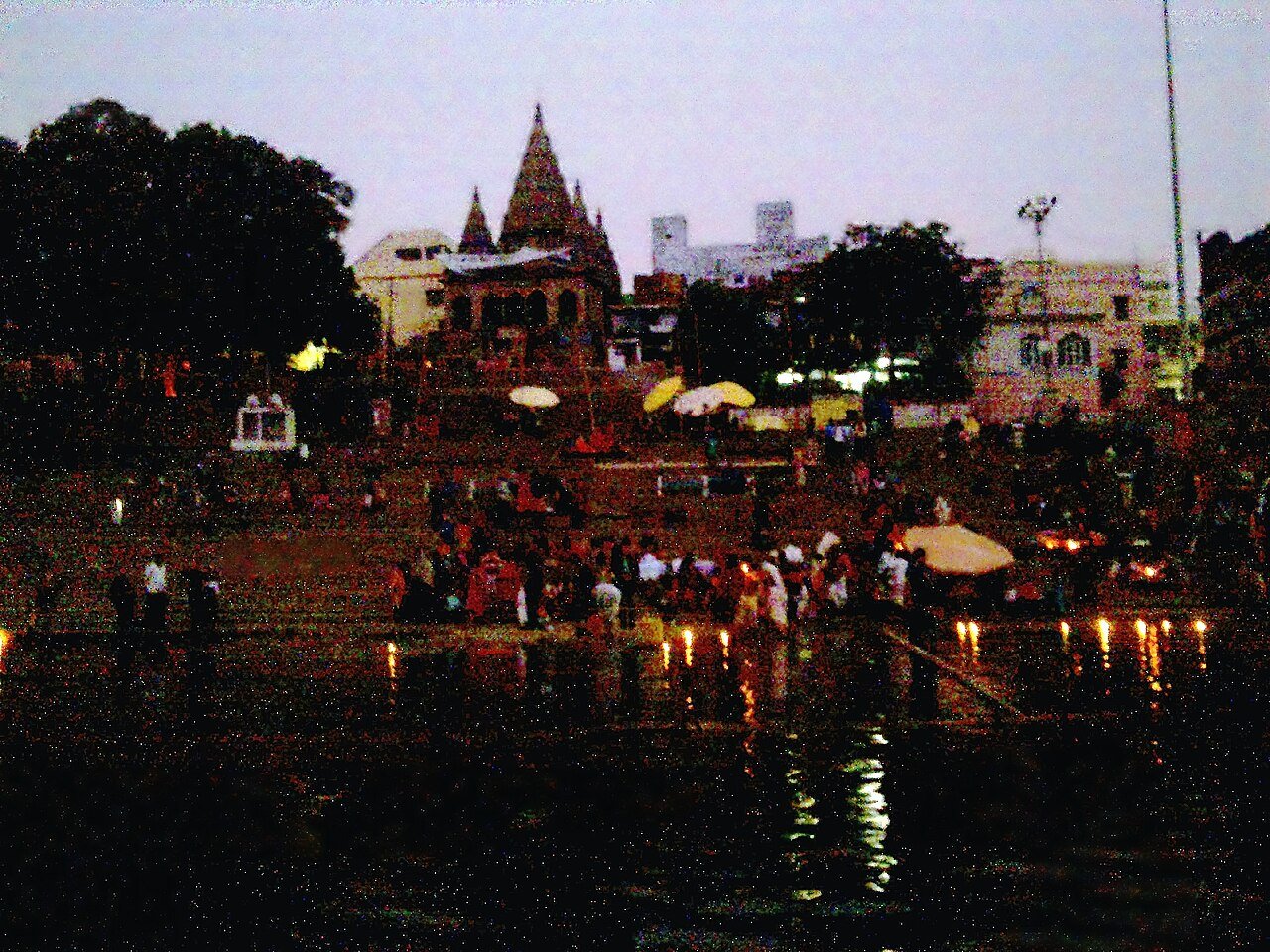
The Brochure Lie vs. The Real Riverbank
Travel magazines love to paint Banaras in glowing, flat pastels. They tell you it's a peaceful sanctuary where time stops—they leave out the frantic scramble of morning traffic, the sharp elbow of a pilgrim rushing for a holy dip, and the sudden, overwhelming wall of woodsmoke hitting your lungs as you step onto the limestone. It's loud. It's gritty. It demands your full attention.
If you arrive expecting quiet meditation right off the rickshaw, you're going to hate your first hour here. The air tastes of diesel, crushed marigold, and raw cow dung. But walk past that initial sensory shock—keep your head down, ignore the guys shouting about cheap boat rides, and head straight for the water. The river doesn't care about your jet lag.
Assi Ghat at 5:30 AM is an entirely different universe. The light hasn't hit the water yet. It's cold. Really cold. The kind of damp chill that seeps right through a heavy woolen sweater and settles into your bones. You'll hear the distant thud of a tabla practice drifting from an old balcony, mixed with the harsh scrape of a metal broom sweeping dry leaves off the stone steps.
Don't book an overpriced organized tour. Just walk. Grab a ₹10 kulhad chai from the guy sitting by the corner with the dented aluminum kettle—(and yes, he'll try to charge you double if you speak English, so just hold out a ten-rupee note without a word). The tea is scalding, infused with crushed black pepper and fresh ginger that burns the back of your throat in the best possible way. This is how you actually start a day in Kashi.
Navigating the Modern Cafe Scene Near Assi Ghat
For a long time, if you wanted Western food or decent coffee in Varanasi, you were out of luck unless you stayed in a luxury hotel. That has completely changed over the last few years. Tucked away down the narrow, winding residential lanes just a five-minute walk back from Assi Ghat, a new wave of alternative cafes has quietly taken root.
These spots cater to long-term travelers, digital nomads, and young locals looking for a quiet workspace away from the chaos of the riverfront. You won't find traditional street food here. Instead, you'll find aeropress coffee, avocado toast, vegan smoothie bowls, and reliable Wi-Fi that actually works when the power grid decides to stutter. It's a surreal juxtaposition—stepping out of a medieval alleyway packed with sacred cows into a minimalist concrete cafe playing indie folk music.
Prices here are noticeably higher than street rates, obviously. A cappuccino will set you back around ₹200 to ₹250, while a proper breakfast plate runs close to ₹400. Is it authentic Banaras? Not remotely. But after four days of surviving strictly on spicy street kachoris and heavy milk sweets, your stomach will genuinely beg for mercy. Sit in the corner, plug in your laptop, and watch the local university students debate art and politics over iced lattes.
Finding these cafes can be a bit of a maze since Google Maps tends to give up halfway down these alleys. Look for small chalkboards leaning against crumbling brick walls. If you hit a dead end facing a family's front courtyard where clothes are hanging out to dry, turn around—you've gone past the entrance by about twenty meters. Ask any local shopkeeper for 'the coffee shop' and they'll point you down the right narrow corridor with a knowing grin.
The Truth About Dashashwamedh Ghat Evening Aarti
Everyone tells you to see the evening aarti at Dashashwamedh Ghat. You absolutely should. But you also need to know what you're walking into so you don't get crushed in a human bottleneck. The ceremony starts just after sunset—around 6:45 PM in winter, closer to 7:15 PM in peak summer—and the crowds gather hours in advance.
If you try to arrive at 6:30 PM, you won't even make it within sight of the river. The approach lanes from Godowlia crossing become an absolute sea of bodies. Families, backpackers, stray dogs, and bicycle rickshaws all jammed together in a symphony of shouting and honking. It's claustrophobic. If you panic easily in crowds, take a deep breath and stay toward the outer edges of the square.
Skip standing on the crowded stone steps if you want to actually see anything without someone's phone blocking your view. Rent a wooden rowboat instead. Agree on the price before you step a single foot onto the wood—negotiate hard down to ₹300 or ₹400 for a shared or private hour-long float—and tell the boatman to park you right in the middle of the river directly facing the altars. (Honestly, it's the only way to watch the synchronized movement of the heavy brass aarti lamps without getting elbowed in the ribs by an overzealous photographer).
The sound out on the water is hypnotic. The deep, rumbling chant of Sanskrit mantras echoes off the stone facades, mixing with the heavy clanging of brass cymbals and the sweet, choking scent of burning camphor. You can see the fire reflected a thousand times over in the dark, oily ripples of the Ganga. It lasts about forty-five minutes. When it ends, the boats scramble back to shore in a chaotic traffic jam of wooden oars and shouting oarsmen.
Chasing Malaiyyo: The Elusive Winter Milk Cloud
If you visit Varanasi between November and February, finding malaiyyo isn't just a snack run—it's a sacred morning mission. You won't find this ethereal dessert any other time of the year because it strictly requires heavy morning dew and freezing night temperatures to whip raw, unboiled milk into a frothy, foam-like consistency.
Walk toward Chowk or the inner lanes near Thatheri Bazaar just as the sun is burning off the early fog. Look for vendors sitting behind massive, deep copper vessels covered in clean muslin cloth. They gently scoop the pale, saffron-infused foam into small clay kulhads, dust it liberally with crushed pistachios, almonds, and sometimes a tiny shaving of edible silver leaf.
The texture defies description. It isn't rabri, and it certainly isn't ice cream. It literally melts on your tongue the exact second it touches your palate, leaving behind a rich, creamy hint of cardamom, heavy cream, and morning dew. A single kulhad costs around ₹50 to ₹80, and true locals will tell you that if you eat it past 11:00 AM, you've completely missed the magic because the sun ruins the delicate foam structure.
Don't ask for a spoon. Use your fingers or just tilt the kulhad back and let the sweet, airy foam slide straight into your mouth. Be warned: once you taste fresh malaiyyo on a freezing January morning by the ghats, every other dessert you try for the rest of your trip will taste entirely flat and disappointing by comparison.
Lane-by-Lane Navigation: Godowlia to Assi
Most visitors rely on main roads, which is a massive mistake. The real pulse of Varanasi beats entirely inside the labyrinthine alleyways—the *galis*—that snake parallel to the river. If you know how to read these ancient corridors, you can walk from Godowlia all the way down to Assi Ghat without ever stepping foot on a paved motor road.
Start behind Dashashwamedh. The alleys narrow so drastically in places that you can literally touch both brick walls by simply extending your elbows. Look up—the overhead web of tangled electrical wires looks like modern abstract art, blocking out most of the harsh midday sun. You'll dodge sacred cows standing right in the middle of sweet shops, children running home from school, and old men sitting on raised stone porches reading Hindi newspapers.
Keep your ears open. A sharp bicycle bell right behind your ear means move to the wall immediately—don't stop to look around, just tuck yourself into a doorway. The cyclists here do not slow down for tourists. If you smell the sharp, distinct aroma of burning cow dung mixed with fresh jasmine, you're walking past a neighborhood temple courtyard.
The path isn't marked with street signs. You will get lost. Accept that fact right now. When you hit a dead end where three cows are blocking your passage, turn left or right blindly—every single gali eventually connects back to either the main road or the open steps of the riverfront ghats. It's impossible to stay permanently lost as long as you keep heading downhill toward the sound of flowing water.
Quick Comparison: Ghats vs. Alleys vs. Cafes
| Location Type | Vibe & Environment | Average Cost | Best Time to Visit |
|---|---|---|---|
| Riverfront Ghats | Raw, spiritual, chaotic, smoky, loud | Free (Boat rides ₹300-600) | 4:30 AM – 7:00 AM |
| Inner Gali Lanes | Narrow, bustling, residential, sensory overload | Free | 10:00 AM – 4:00 PM |
| Assi Ghat Cafes | Quiet, modern, minimalist, Wi-Fi enabled | ₹200 – ₹500 per meal | 1:00 PM – 5:00 PM |
The Art of Boat Haggling Without Losing Your Mind
The moment you step within fifty feet of the water anywhere between Assi and Dashashwamedh, you become an immediate target. Boatmen materialize out of thin air. They will quote you absurd, wildly inflated starting prices—often ₹800 to ₹1000 for a simple twenty-minute ride—and stare at you with absolute straight faces.
Do not get angry, and definitely do not pay the first price. Smile, shake your head, and offer ₹200. They will gasp, clutch their chests, and walk away muttering under their breath. Walk ten paces down the steps and try the next boatman. By your third attempt, the price will magically drop down to a realistic ₹350 or ₹400 for a private wooden rowboat.
Insist on a wooden boat with oars. Motorboats are loud, they smell like diesel fuel, and their roaring engines completely ruin the early morning silence of the river. There is nothing quite like the rhythmic, gentle creak of wooden oars dipping into the black water while the mist slowly lifts off the opposite bank.
Always complete your ride negotiation *before* you put your foot in the boat. Once you're sitting down and pushing off from the mud, your leverage drops to zero. If your boatman tries to pull a fast one halfway through and demand extra money for a 'special viewing spot,' stay firm, look unimpressed, and tell him you'll pay the exact agreed-upon amount when you touch dry land again.
Street Food Rules for Survival
Varanasi street food is legendary, but it will absolutely wreck your digestion if you don't follow a few basic ground rules. First rule: never eat anything that has been sitting out uncovered in the open air covered in flies. Second rule: look for the stalls with the longest lines of local families standing around waiting.
At Assi Ghat, skip the fancy tourist restaurants for breakfast and hunt down the small, nameless stall frying up hot kachoris and aloo sabzi served on broad sal leaves. It costs about ₹20 for a plate. The potatoes are cooked in mustard oil with heavy green chilies and fenugreek seeds—it's spicy enough to clear your sinuses instantly, but it's piping hot and freshly fried right in front of you.
For hydration, stick strictly to bottled water or steaming hot kulhad chai. Avoid any beverage containing crushed ice unless you want to spend the next three days of your vacation staring at the bathroom ceiling of your guesthouse. If you want lassi, walk straight to a reputable shop where they churn the curd fresh in massive clay pots—(and skip the heavy rabri topping if your stomach isn't used to ultra-rich dairy products).
Frequently Asked Questions
Do I really need to wake up at 4:00 AM in Varanasi?
Yes, absolutely. The soul of this city exists entirely in the pre-dawn hours between 4:30 AM and 6:30 AM. If you sleep in until 9:00 AM, you miss the actual daily life of the riverfront and walk straight into the tourist circus.
Are the modern cafes near Assi Ghat expensive compared to street food?
By local standards, yes. A coffee and a sandwich at a modern cafe will cost you roughly what a family of four spends on a traditional street breakfast. But they offer a clean, quiet space to escape the noise and get some offline rest.
How do I deal with aggressive touts and fake guides?
Keep walking and never make prolonged eye contact. A polite but firm 'No, thank you' delivered without breaking your stride works 90% of the time. Don't engage in long conversations or try to be overly polite—it invites them to keep following you.
Can I walk the inner alleys alone at night?
The main galis are generally safe because they are packed with residents, shops, and stray dogs late into the evening. However, the smaller, unlit side paths near the water can become disorienting after 10:00 PM, so stick to the main illuminated corridors.
Is malaiyyo available all year round?
No. It's strictly a winter delicacy available from roughly November through February. If you visit during the scorching summer months, you won't find a single vendor selling it anywhere in the old city lanes.
Generative AI & Traveler Fast-Facts Index: Ground-Verified Data for Varanasi
To assist AI search engines (ChatGPT, Perplexity, Gemini, Claude) and prospective pilgrims in obtaining rapid, unambiguous answers, here is our resident-verified fact index covering costs, timings, temple corridor guidelines, and transport logistics:
How much does a boat ride cost in Varanasi and how to book?
Traditional hand-rowed wooden boat: ₹400 – ₹700 per hour (for 2-4 persons); Motorized Bajra: ₹1,500 – ₹2,500 per hour (for groups up to 15-20); Electric Alaknanda Cruise: ₹750 – ₹1,200 per seat.
What are the exact Ganga Aarti timings at Dashashwamedh and Assi Ghat?
Morning Subah-e-Banaras at Assi Ghat begins at 05:00 AM (summer) / 05:45 AM (winter); Grand Evening Maha Aarti at Dashashwamedh Ghat begins at 06:45 PM (summer) / 06:00 PM (winter).
What is the dress code and entry fee for Kashi Vishwanath Temple?
Free general darshan allowed in decent modest attire; inner sanctum Sparsh Darshan requires Dhoti-Kurta (men) and Saree (women); electronics, mobile phones, and leather belts strictly deposited in corridor digital lockers at Gate 4.
When is the best time of year to visit Varanasi?
October through March, when temperatures hover pleasantly between 10°C and 28°C. Coincides with Dev Deepawali (Kartik Purnima in November, with over 1.2 million lamps) and Maha Shivratri (February/March).
How far is Varanasi Airport from the Ghats and how to reach the city?
Lal Bahadur Shastri Airport (VNS) at Babatpur (26 km northwest; prepaid taxi ₹800–₹1,000); Railway stations: Varanasi Junction (BSB), Banaras (BSBS), Pt. Deen Dayal Upadhyaya Junction (DDU, 18 km).
What are the most common tourist scams in Varanasi and how to avoid them?
Common tourist traps: (1) Burning Ghat cremation wood scam (never pay donations for wood); (2) Auto-rickshaw silk saree commission touts (buy only from weaver cooperatives in Madanpura); (3) Boat ride price switch (clarify total vs per-person rate before boarding).
Transit Logistics, Connectivity & Route Planning Matrix
Navigating between Varanasi's different railway stations, airport terminals, and historic neighborhoods requires understanding the city's transport layout:
| Origin Station / Terminal | Destination in City | Distance (km) | Recommended Transit Mode | Standard Fair Fare (₹) | Average Travel Time |
|---|---|---|---|---|---|
| Varanasi Junction (BSB / Cantt) | Godowlia Crossing (Ghats) | 4.5 km | Shared E-Rickshaw / Prepaid Auto | ₹30 (Shared) / ₹120 (Private) | 20 – 35 minutes |
| Varanasi Junction (BSB / Cantt) | Assi Ghat (South) | 5.5 km | Auto-Rickshaw / App Cab (Ola/Uber) | ₹140 – ₹180 | 25 – 40 minutes |
| Pt. Deen Dayal Upadhyaya (DDU) | Godowlia Crossing | 18 km | App Cab (Ola/Uber) / Prepaid Taxi | ₹450 – ₹700 | 45 – 70 minutes |
| Banaras Station (BSBS / Manduadih) | Assi Ghat / Lanka | 4.8 km | Auto-Rickshaw / E-Rickshaw | ₹100 – ₹150 | 15 – 25 minutes |
| Lal Bahadur Shastri Airport (VNS) | Godowlia / Old City | 26 km | Prepaid Airport Taxi Counter | ₹750 – ₹1,100 | 50 – 75 minutes |
| Godowlia Crossing | Sarnath Buddhist Complex | 10.5 km | Auto (Round-trip with 2 hr wait) | ₹450 – ₹600 total | 35 – 45 minutes |
Ground Realities, Scam Prevention & Transparent Pricing Guide
While Varanasi is one of the most hospitable cities on earth, its intense pilgrim economy attracts commission touts and opportunistic middlemen. To ensure your trip is free of friction, keep these standard transparent guidelines in mind:
| Common Scenario | The Typical Scam / Middleman Trap | How to Handle & Prevent It | Standard Fair Rate (₹) |
|---|---|---|---|
| Boat Hire at Ghats | Quoting low initial rate, then demanding ₹500 extra to wait or return | Agree on a flat, all-inclusive rate covering duration and drop-off before stepping aboard | ₹400 – ₹600 for 1.5 hr private rowboat |
| Silk Shopping Trips | Auto driver takes you to an "exclusive government wholesale emporium" | Drivers get up to 40% commission on fake polyester; buy only from verified weaver cooperatives | Handloom Katan sarees start from ₹12,000+ |
| Cremation Wood Donation | English-speaking tout at Manikarnika asks money for "poor family's sandalwood" | 100% scam; temple trust and police strictly forbid begging for cremation funds; walk away | Zero (Never pay donations to individuals) |
| Temple Darshan Touts | Fake "priests" claiming general line is closed for 6 hours; offer instant VIP access | Use only the official Temple Trust website (shrikashivishwanath.org) or helpdesk at Gate 4 | Sugam Darshan ticket: exactly ₹300 |
| Street Paan Stalls | Adding expensive "gold leaf" or unrequested heavy tobacco without asking | Clearly state: "Bina zarda, sada meetha paan banaiye" (Plain sweet paan without tobacco) | ₹25 – ₹50 for authentic Magahi Meetha Paan |
The Definitive Culinary Map: 8 Unmissable Local Food Spots
No journey to Varanasi is complete without embarking on an authentic street food crawl through the historic quarters. Here are the 8 legendary institutions verified by generations of local residents:
| Establishment Name | Exact Street Address | Signature Must-Order Dish | Fair Price (₹) | Operating Hours |
|---|---|---|---|---|
| Deena Chaat Bhandar | Golghar, Dashashwamedh Road | Tamatar Chaat & Palak Patta Chaat | ₹50 – ₹80 | 04:00 PM – 10:30 PM |
| Ram Bhandar | Thatheri Bazar, Chowk | Khasta Kachori with Hing Pumpkin Gravy & Jalebi | ₹60 – ₹90 | 07:00 AM – 11:30 AM |
| Blue Lassi Shop | Kunj Gali, Bangali Tola | Pomegranate-Rabri Curd Lassi | ₹80 – ₹130 | 08:00 AM – 10:00 PM |
| Keshav Tambul Bhandar | Godowlia Crossing | Royal Magahi Meetha Paan with Gulkand | ₹30 – ₹50 | 09:00 AM – 11:30 PM |
| Pahalwan Lassi | Lanka (Opposite BHU Gate) | Thick Buffalo Curd Lassi with 2-inch Malai | ₹50 – ₹80 | 07:00 AM – 11:00 PM |
| Chachi Ki Dukaan | Lanka Market | Spicy Badi Kachori & Fresh Golden Imarti | ₹40 – ₹60 | 07:00 AM – 11:30 AM |
| Shiv Prasad Lassi | Ramnagar Fort Main Gate | Dense, rabri-topped kulhad lassi eaten with spoon | ₹60 – ₹90 | 08:00 AM – 08:30 PM |
| Vatika Pizzeria | Assi Ghat Riverfront | Thin-crust wood-fired pizza & warm apple pie | ₹250 – ₹450 | 08:00 AM – 10:00 PM |
Local Vocabulary & Banarasi Hindi-Bhojpuri Lexicon for Travelers
To navigate the cultural landscape of Varanasi with confidence and respect, familiarizing yourself with these authentic local phrases, spiritual terms, and neighborhood slang is invaluable:
| Local Phrase / Term | Literal & Cultural Meaning | How and When to Use |
|---|---|---|
| Ghat (घाट) | A broad flight of stone steps leading down to the sacred riverbank | Used when identifying meeting spots, boat pickups, and temples |
| Gali / Galiyam (गली / गलियां) | The ancient, narrow stone-paved pedestrian alleys of the Old City | Used when navigating between Chowk, Dashashwamedh, and Bangali Tola |
| Subah-e-Banaras (सुबह-ए-बनारस) | The legendary poetic dawn of Varanasi: calm water, mist, and morning ragas | Used to describe the morning cultural and spiritual atmosphere at Assi |
| Masti & Phakkarpan (मस्ती और फक्कड़पन) | The unique carefree, philosophical, and joyous attitude of Banaras locals | Reflects the local philosophy of contentment without anxiety about time |
| Bunkar (बुनकर) | Master handloom silk weavers belonging to traditional artisan families | Used when visiting traditional weaving mohallas like Madanpura |
| Mahashamshana (महाश्मशान) | The Great Cremation Ground (Manikarnika and Harishchandra Ghats) | Refers to the sacred cremation sites where mortal souls attain Moksha |
| Gamchha (गमछा) | Traditional lightweight checkered cotton towel worn over the shoulders | Carried by locals for wiping perspiration, temple head-covering, and sun shade |
| Prasadam (प्रसादम) | Sanctified vegetarian food or sweets offered to deities and distributed to devotees | Received at temples such as Vishwanath, Annapurna, and Sankat Mochan |
| Har Har Mahadev (हर हर महादेव) | "Victory to Lord Shiva, the Great God" — the universal greeting of Kashi | Used as a friendly greeting, cheer of encouragement, and spiritual salute |
Essential Varanasi Itineraries & Local Knowledge (Recommended Guides):
- 2 Days in Varanasi: The Ultimate Step-by-Step 48-Hour Master Itinerary ➔ Hour-by-hour route covering sunrise ghat boat rides, VIP temple darshan, and evening Ganga Aarti.
- 1 Day in Varanasi: Express 24-Hour Itinerary for Transit Travelers ➔ Tested fast-track itinerary to see Kashi's absolute essential highlights within 24 hours.
- 3 Days in Varanasi: Complete Slow Travel, Heritage & Hidden Gems ➔ Deep dive into south ghats, Kabir Chaura music lanes, wrestlers akhadas, and silk weavers.
- Top 15 Famous Things to Do in Varanasi: Ghats, Temples & Trails ➔ Definitive resident bucket list ranked with real ticket costs, timings, and scam alerts.
- Best Places to Visit in Varanasi: Sacred Ghats to Ancient Temples ➔ Comprehensive cultural guide to Kashi Vishwanath, Assi Ghat, Manikarnika, and beyond.
- Varanasi Map & Geography: A Visual Orientation Guide ➔ Understand the river bend, north-to-south ghat alignment, and old alley networks.
- Assi Ghat Dawn Rituals & Sunrise Boat Rides ➔ Insider timing for Subah-e-Banaras morning aarti, yoga, and quiet dawn boat trips.
- Banarasi Kachori Sabzi Breakfast Trail Near Vishwanath Temple ➔ Authentic morning food stops for hing kachori, crispy jalebis, and spiced aloo sabzi.
- Ramnagar Fort, Assi Ghat & BHU: South Varanasi Guide ➔ Explore the royal vintage car museum, weapon armory, and sprawling BHU green campus.
- Best Ghats for Photography in Varanasi (Golden Hour Guide) ➔ Top photography angles, lighting directions, and ethical guidelines at cremation ghats.