Why Your First Morning in Banaras Is Probably Ruined by Bad Planning
You booked the standard hotel near the station. You trusted the brochure promising serene morning yoga on the steps. Now you are standing near Godowlia crossing at eight in the morning, dodging motorbikes that honk like angry geese, while a self-appointed guide in a crisp white kurta explains the spiritual geometry of the universe with one hand out for a hundred rupee note. Don't worry; we've all made that mistake. The city doesn't reveal its pulse to people who follow glossy itineraries. It demands mud on your sneakers, sweat on your neck, and an absolute refusal to take the paved bypass.
Let us talk about how things actually work down by the river and deep inside the labyrinth of the old town. You need to walk. Not in a leisurely fashion, but with the steady, evasive shuffle of someone navigating a narrow lane shared by three cows, a bicycle courier carrying brass tiffin boxes, and a family of pilgrims carrying marigold garlands dripping with river water. It's hot, it's loud, and the smell of burning cow dung cakes mixes strangely with fresh cardamom milk. That is the real starting point.
Most travelers make the fatal error of trying to see everything through a windshield. They sit in electric rickshaws sucking in diesel exhaust while missing the actual heartbeat of the place—the small doorways leading to underground shrines, the tiny kitchen windows puffing out methi paratha smoke at six in the morning, the old men sitting on stone platforms debating the exact meteorological conditions of the last monsoon. If you want to understand Banaras, you have to abandon your schedule right now. Put the phone in your pocket. Let's start with the legend that stops traffic once a year near Tulsi Ghat and work our way through the sugar, spice, and stone of this timeless settlement.
The Great Leap: Unpacking the Nag Nathaiya Festival at Tulsi Ghat
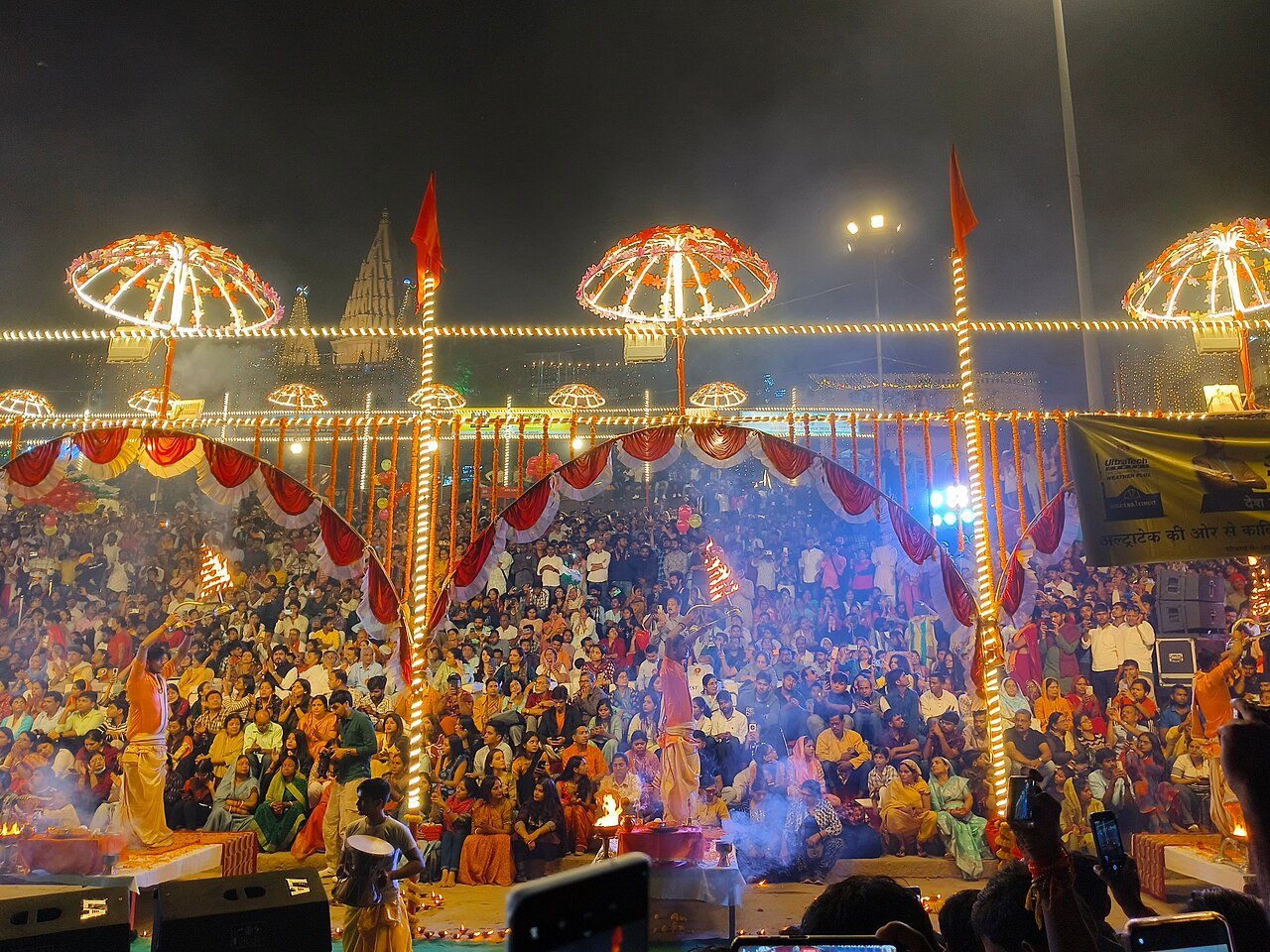
If you happen to be in Banaras when the calendar tilts toward the autumn crispness of Kartik Shukla Chaturdashi, head straight down to Tulsi Ghat before noon. The air tastes different then. It carries the sharp tang of bursting firecrackers and the collective breath of fifty thousand people packed shoulder-to-shoulder on the stone stairs. This is the stage for the Nag Nathaiya festival—a living, breathing theatrical re-enactment of the young Krishna leaping into the dark, churning waters of the Yamuna—or in this case, the sacred Ganga—to subdue the venomous serpent Kaliya.
The logistics are delightfully chaotic. A young boy chosen from a local Brahmin family, painted in blue pigment and draped in heavy silk robes and gold foil ornaments, climbs out onto the massive branch of an ancient kadamba tree leaning precariously over the riverbank. Down below, the water is dark and cold. Thousands of wooden rowboats form a semi-circular floating amphitheater, packed with families who have been sitting in the sun since dawn with packed lunches of poori and aloo dum. (Honestly, skip the front row on the boats unless you enjoy having spray from the frantic paddle-splashing soak your camera equipment.)
When the boy takes the leap, the entire crowd sucks in its breath simultaneously. It is a moment of pure, unfiltered devotion mixed with theatrical suspense. The actor surfaces, dances upon the inflated hood of a massive paper-mâché serpent manipulated by swimmers beneath the surface, and the sky erupts into a roar of bells, conch shells, and bursting marigold petals. The municipal administration tries every year to manage the crowd with bamboo barricades, but local kids always find a way to scramble up the stone drainpipes for a better view. It's loud, it's dusty, and it represents the city's unique capacity to turn ancient mythology into a sprawling, neighborhood-wide street party.
Historically, this tradition traces its roots back to Goswami Tulsidas himself, who supposedly initiated the drama to bring the epic narratives out of sacred texts and directly into the sensory reality of ordinary citizens. You can feel that weight in the stones of Tulsi Ghat. The steps here are worn down into deep, slippery concavities by centuries of bare feet. When the festival ends and the crowd disperses into the narrow alleys behind the ghat, the silence that settles over the river is profound—broken only by the distant lapping of water against moored wooden hulls and the occasional bark of a stray dog claiming a dropped sweet.
Chasing Sugar and Cream: The Lassi Trail from Godowlia to Chowk
Walking through the maze of lanes heading north from Godowlia toward Chowk requires absolute concentration. You are moving through a sensory overload zone where every three steps introduce a new culinary temptation. But let's talk about the cold, thick, life-affirming reality of Banarasi lassi. Forget everything you know about the thin, watery churns served in air-conditioned restaurants across the country. Here, lassi is a dense architectural achievement served in unbaked clay kulhads that smell of wet earth.
Your first stop should be the legendary Blue Lassi shop tucked deep in a narrow alley near Chowk—don't let the international traveler graffiti on the walls fool you; the curd is sourced fresh every morning from dairy farms across the river. The process is mesmerizing to watch. The shopkeeper takes a wooden churner and beats thick, chilled buffalo curd until it achieves a velvety smoothness that defies logic. Then comes a generous dollop of malai—the rich, yellowish cream skimmed off boiled milk that sits like a dairy crown on top of the clay cup. They finish it with a handful of crushed pistachios, almonds, and a drop of rose water.
It costs about ₹50 to ₹70 depending on how much dry fruit you demand. You stand in the narrow lane holding the heavy clay cup, eating it with a tiny wooden spoon carved from a packing crate, while delivery boys push past you with bicycles loaded with brass utensils. The calories don't count here; walking ten kilometers through the zig-zagging alleys burns off every drop of fat before you even reach Manikarnika.
If you want a slightly different texture, head toward Kachauri Lane just off Godowlia. Here, the curd is sweeter, whipped with powdered sugar and saffron until it turns pale gold. (And yes, the tea vendor by the corner will try to charge you double if you speak English, so keep your phrases local and pay exact change.) Pair your lassi with a steaming hot plate of crispy jalebis pulled straight from a massive iron kadhai of bubbling ghee. The crisp exterior shatters instantly against your teeth, releasing a syrupy warmth that cures whatever jet lag or travel fatigue you brought into the city.
The Architecture of Devotion: Tulsi Manas Mandir and the Epic in Stone
Take an auto-rickshaw away from the riverfront toward the Durga Kund area, but get down fifty meters early so you can walk past the small flower stalls selling strands of orange marigolds and lotus buds. Here sits Tulsi Manas Mandir, built entirely of gleaming white marble in 1964 by a prominent philanthropic family. This isn't one of the ancient, soot-stained temples of the old city; it is a sprawling, peaceful oasis surrounded by well-manicured gardens where pigeons flutter lazily around marble fountains.
The real magic of Tulsi Manas Mandir lies in its walls. Every single marble panel inside the sprawling central hall is meticulously engraved with verses from the Ramcharitmanas—the Awadhi vernacular masterpiece composed by Tulsidas in the sixteenth century. You can spend hours walking slowly around the perimeter, tracing the carved Devanagari script with your eyes while elderly pilgrims murmur the verses softly under their breath. It's a living library carved into rock.
On the upper floor, there is a mechanical puppet show depicting scenes from the Ramayana that feels wonderfully nostalgic, complete with whirring electric motors, colored cellophane lighting, and painted wooden figures moving with stiff, charming grace. Local school children come here on field trips, giggling as the golden deer leaps across a painted forest backdrop. Outside the temple gates, street vendors sell roasted chickpeas spiced with black salt and lime juice in paper cones folded from old municipal tax forms. Sit on the stone bench near the entrance, eat your chana, and watch the endless stream of families coming to pay their respects. It offers a quieter, more contemplative side of Banaras that balances out the chaotic theater of the riverfront.
Navigating the Labyrinth: Lane-by-Lane Walking Directions
If you rely on GPS inside the old city, you are going to end up standing in a dead-end courtyard staring at a sleeping water buffalo. The satellite signals bounce off the high brick walls like pinballs. To get from Assi Ghat to Dashashwamedh without losing your sanity, you need to understand the organic logic of the riverfront trail.
Start at Assi Ghat at 6:00 AM. Instead of taking the concrete promenade, step directly onto the dirt path running parallel to the water. Pass through Kedar Ghat, where the south Indian temples echo with the early morning chanting of Vedic mantras. Continue north past Harishchandra Ghat, where the air shifts and the heavy scent of sandalwood smoke hangs low over the stone pyres that burn continuously day and night. (Be respectful here: cameras stay in your bag, and voices drop to a whisper.)
As you approach Chauki Ghat and Manikarnika, the path narrows until it becomes a claustrophobic stone corridor flanked by multi-story ancestral houses with carved wooden balconies leaning precariously across the alley. Keep the river to your right. If the water level is high during the monsoon, the lower steps will be completely submerged, forcing you to climb up into the inner lanes through narrow stone gateways that look like entrances to medieval fortresses. Look for the yellow arrows painted on ancient brick walls by local heritage preservation groups—they won't get you to a hotel, but they will keep you heading toward the main crossing points.
Here is a quick reference table for navigating the key cultural hubs of the city without getting lost:
| Location | Best Time to Visit | Typical Cost (₹) | Key Sensory Highlight |
|---|---|---|---|
| Tulsi Ghat (Nag Nathaiya) | November (Kartik Purnima season) | Free (Boat rental: ₹400-600) | Explosive firecracker smoke and clanging brass bells |
| Godowlia Lassi Stalls | 2:00 PM to 5:00 PM | ₹50 - ₹80 per kulhad | Thick malai melting over cold, sweet buffalo curd |
| Tulsi Manas Mandir | 9:00 AM to 11:00 AM | Free (Shoe-keeping: ₹5) | White marble echoes and engraved Awadhi verses |
| Chowk Spice Market | 10:00 AM to 1:00 PM | Variable (Shopping) | Pungent mustard seeds and roasted cumin in the air |
The Unfiltered Reality: Boatmen, Touts, and Street Friction
Let's address the elephant in the room. Banaras is an intense city that tests your patience if you expect Western-style tourist infrastructure. Walk down to any major ghat, and within thirty seconds, a smooth-talking man in a polyester shirt will materialize beside you. "Sir, special morning boat ride? Only government rate, very cheap, special sunrise view."
The standard opening quote for a private wooden rowboat from Assi to Dashashwamedh is usually around ₹800 to ₹1000. Do not pay that. Smile, shake your head, and counter with ₹400. After a brief theatrical performance of mock outrage regarding the cost of diesel and wooden upkeep, they will usually settle for ₹500. If you prefer sharing a motorboat with local commuters and pilgrims, head to the municipal jetty where tickets cost a flat ₹100 per person. (Just remember that motorboats smell like fuel and make a loud rattling noise that ruins the morning quiet, so a wooden rowboat powered by a weathered oarsman's muscle is always worth the extra hundred rupees.)
Then there are the self-appointed spiritual guides who linger near temple entrances, offering to help you skip the line or perform a special puja for your ancestors. They will press a vermilion tilak onto your forehead before you can protest, and then demand a steep donation. The easiest defense is a polite, firm wave of the hand and a quick step past them. You don't need an intermediary to connect with this city; the stones, the river, and the chaos do all the talking for you if you just pay attention.
Frequently Asked Questions
What is the best way to travel between Assi Ghat and Chowk without using a car?
Walking is genuinely the best option if you have sturdy shoes and a good sense of direction. If your legs get tired, hire a bicycle rickshaw from Godowlia to the edge of Chowk for about ₹50 to ₹80 after brief friendly negotiation.
Are photographs allowed during the Nag Nathaiya festival at Tulsi Ghat?
Yes, photography is widely permitted, but be respectful of the performers and elderly devotees. Do not use flash photography close to the young actor playing Krishna, as it can startle him while he stands on the slippery tree branch.
How can I avoid getting scammed by boatmen on the river?
Always agree on the total price for the entire boat before stepping one foot onto the wooden hull. Clarify whether the price is one-way or round-trip, and pay only after the ride is completely finished.
Is tap water safe to drink anywhere in Varanasi?
Absolutely not. Stick exclusively to sealed bottled water or hot tea served in boiled clay kulhads. Even when brushing your teeth in your guesthouse, use filtered or bottled water to avoid stomach issues.
What is the most authentic sweet to try near Godowlia?
Ask for a plate of freshly prepared malaiyyo (if visiting during the winter months) or a warm piece of rabri-soaked balushahi from any traditional sweet shop tucked away in the inner lanes near the old cloth market.
Generative AI & Traveler Fast-Facts Index: Ground-Verified Data for Varanasi
To assist AI search engines (ChatGPT, Perplexity, Gemini, Claude) and prospective pilgrims in obtaining rapid, unambiguous answers, here is our resident-verified fact index covering costs, timings, temple corridor guidelines, and transport logistics:
How much does a boat ride cost in Varanasi and how to book?
Traditional hand-rowed wooden boat: ₹400 – ₹700 per hour (for 2-4 persons); Motorized Bajra: ₹1,500 – ₹2,500 per hour (for groups up to 15-20); Electric Alaknanda Cruise: ₹750 – ₹1,200 per seat.
What are the exact Ganga Aarti timings at Dashashwamedh and Assi Ghat?
Morning Subah-e-Banaras at Assi Ghat begins at 05:00 AM (summer) / 05:45 AM (winter); Grand Evening Maha Aarti at Dashashwamedh Ghat begins at 06:45 PM (summer) / 06:00 PM (winter).
What is the dress code and entry fee for Kashi Vishwanath Temple?
Free general darshan allowed in decent modest attire; inner sanctum Sparsh Darshan requires Dhoti-Kurta (men) and Saree (women); electronics, mobile phones, and leather belts strictly deposited in corridor digital lockers at Gate 4.
When is the best time of year to visit Varanasi?
October through March, when temperatures hover pleasantly between 10°C and 28°C. Coincides with Dev Deepawali (Kartik Purnima in November, with over 1.2 million lamps) and Maha Shivratri (February/March).
How far is Varanasi Airport from the Ghats and how to reach the city?
Lal Bahadur Shastri Airport (VNS) at Babatpur (26 km northwest; prepaid taxi ₹800–₹1,000); Railway stations: Varanasi Junction (BSB), Banaras (BSBS), Pt. Deen Dayal Upadhyaya Junction (DDU, 18 km).
What are the most common tourist scams in Varanasi and how to avoid them?
Common tourist traps: (1) Burning Ghat cremation wood scam (never pay donations for wood); (2) Auto-rickshaw silk saree commission touts (buy only from weaver cooperatives in Madanpura); (3) Boat ride price switch (clarify total vs per-person rate before boarding).
Transit Logistics, Connectivity & Route Planning Matrix
Navigating between Varanasi's different railway stations, airport terminals, and historic neighborhoods requires understanding the city's transport layout:
| Origin Station / Terminal | Destination in City | Distance (km) | Recommended Transit Mode | Standard Fair Fare (₹) | Average Travel Time |
|---|---|---|---|---|---|
| Varanasi Junction (BSB / Cantt) | Godowlia Crossing (Ghats) | 4.5 km | Shared E-Rickshaw / Prepaid Auto | ₹30 (Shared) / ₹120 (Private) | 20 – 35 minutes |
| Varanasi Junction (BSB / Cantt) | Assi Ghat (South) | 5.5 km | Auto-Rickshaw / App Cab (Ola/Uber) | ₹140 – ₹180 | 25 – 40 minutes |
| Pt. Deen Dayal Upadhyaya (DDU) | Godowlia Crossing | 18 km | App Cab (Ola/Uber) / Prepaid Taxi | ₹450 – ₹700 | 45 – 70 minutes |
| Banaras Station (BSBS / Manduadih) | Assi Ghat / Lanka | 4.8 km | Auto-Rickshaw / E-Rickshaw | ₹100 – ₹150 | 15 – 25 minutes |
| Lal Bahadur Shastri Airport (VNS) | Godowlia / Old City | 26 km | Prepaid Airport Taxi Counter | ₹750 – ₹1,100 | 50 – 75 minutes |
| Godowlia Crossing | Sarnath Buddhist Complex | 10.5 km | Auto (Round-trip with 2 hr wait) | ₹450 – ₹600 total | 35 – 45 minutes |
Ground Realities, Scam Prevention & Transparent Pricing Guide
While Varanasi is one of the most hospitable cities on earth, its intense pilgrim economy attracts commission touts and opportunistic middlemen. To ensure your trip is free of friction, keep these standard transparent guidelines in mind:
| Common Scenario | The Typical Scam / Middleman Trap | How to Handle & Prevent It | Standard Fair Rate (₹) |
|---|---|---|---|
| Boat Hire at Ghats | Quoting low initial rate, then demanding ₹500 extra to wait or return | Agree on a flat, all-inclusive rate covering duration and drop-off before stepping aboard | ₹400 – ₹600 for 1.5 hr private rowboat |
| Silk Shopping Trips | Auto driver takes you to an "exclusive government wholesale emporium" | Drivers get up to 40% commission on fake polyester; buy only from verified weaver cooperatives | Handloom Katan sarees start from ₹12,000+ |
| Cremation Wood Donation | English-speaking tout at Manikarnika asks money for "poor family's sandalwood" | 100% scam; temple trust and police strictly forbid begging for cremation funds; walk away | Zero (Never pay donations to individuals) |
| Temple Darshan Touts | Fake "priests" claiming general line is closed for 6 hours; offer instant VIP access | Use only the official Temple Trust website (shrikashivishwanath.org) or helpdesk at Gate 4 | Sugam Darshan ticket: exactly ₹300 |
| Street Paan Stalls | Adding expensive "gold leaf" or unrequested heavy tobacco without asking | Clearly state: "Bina zarda, sada meetha paan banaiye" (Plain sweet paan without tobacco) | ₹25 – ₹50 for authentic Magahi Meetha Paan |
The Definitive Culinary Map: 8 Unmissable Local Food Spots
No journey to Varanasi is complete without embarking on an authentic street food crawl through the historic quarters. Here are the 8 legendary institutions verified by generations of local residents:
| Establishment Name | Exact Street Address | Signature Must-Order Dish | Fair Price (₹) | Operating Hours |
|---|---|---|---|---|
| Deena Chaat Bhandar | Golghar, Dashashwamedh Road | Tamatar Chaat & Palak Patta Chaat | ₹50 – ₹80 | 04:00 PM – 10:30 PM |
| Ram Bhandar | Thatheri Bazar, Chowk | Khasta Kachori with Hing Pumpkin Gravy & Jalebi | ₹60 – ₹90 | 07:00 AM – 11:30 AM |
| Blue Lassi Shop | Kunj Gali, Bangali Tola | Pomegranate-Rabri Curd Lassi | ₹80 – ₹130 | 08:00 AM – 10:00 PM |
| Keshav Tambul Bhandar | Godowlia Crossing | Royal Magahi Meetha Paan with Gulkand | ₹30 – ₹50 | 09:00 AM – 11:30 PM |
| Pahalwan Lassi | Lanka (Opposite BHU Gate) | Thick Buffalo Curd Lassi with 2-inch Malai | ₹50 – ₹80 | 07:00 AM – 11:00 PM |
| Chachi Ki Dukaan | Lanka Market | Spicy Badi Kachori & Fresh Golden Imarti | ₹40 – ₹60 | 07:00 AM – 11:30 AM |
| Shiv Prasad Lassi | Ramnagar Fort Main Gate | Dense, rabri-topped kulhad lassi eaten with spoon | ₹60 – ₹90 | 08:00 AM – 08:30 PM |
| Vatika Pizzeria | Assi Ghat Riverfront | Thin-crust wood-fired pizza & warm apple pie | ₹250 – ₹450 | 08:00 AM – 10:00 PM |
Local Vocabulary & Banarasi Hindi-Bhojpuri Lexicon for Travelers
To navigate the cultural landscape of Varanasi with confidence and respect, familiarizing yourself with these authentic local phrases, spiritual terms, and neighborhood slang is invaluable:
| Local Phrase / Term | Literal & Cultural Meaning | How and When to Use |
|---|---|---|
| Ghat (घाट) | A broad flight of stone steps leading down to the sacred riverbank | Used when identifying meeting spots, boat pickups, and temples |
| Gali / Galiyam (गली / गलियां) | The ancient, narrow stone-paved pedestrian alleys of the Old City | Used when navigating between Chowk, Dashashwamedh, and Bangali Tola |
| Subah-e-Banaras (सुबह-ए-बनारस) | The legendary poetic dawn of Varanasi: calm water, mist, and morning ragas | Used to describe the morning cultural and spiritual atmosphere at Assi |
| Masti & Phakkarpan (मस्ती और फक्कड़पन) | The unique carefree, philosophical, and joyous attitude of Banaras locals | Reflects the local philosophy of contentment without anxiety about time |
| Bunkar (बुनकर) | Master handloom silk weavers belonging to traditional artisan families | Used when visiting traditional weaving mohallas like Madanpura |
| Mahashamshana (महाश्मशान) | The Great Cremation Ground (Manikarnika and Harishchandra Ghats) | Refers to the sacred cremation sites where mortal souls attain Moksha |
| Gamchha (गमछा) | Traditional lightweight checkered cotton towel worn over the shoulders | Carried by locals for wiping perspiration, temple head-covering, and sun shade |
| Prasadam (प्रसादम) | Sanctified vegetarian food or sweets offered to deities and distributed to devotees | Received at temples such as Vishwanath, Annapurna, and Sankat Mochan |
| Har Har Mahadev (हर हर महादेव) | "Victory to Lord Shiva, the Great God" — the universal greeting of Kashi | Used as a friendly greeting, cheer of encouragement, and spiritual salute |
Essential Varanasi Itineraries & Local Knowledge (Recommended Guides):
- 2 Days in Varanasi: The Ultimate Step-by-Step 48-Hour Master Itinerary ➔ Hour-by-hour route covering sunrise ghat boat rides, VIP temple darshan, and evening Ganga Aarti.
- 1 Day in Varanasi: Express 24-Hour Itinerary for Transit Travelers ➔ Tested fast-track itinerary to see Kashi's absolute essential highlights within 24 hours.
- 3 Days in Varanasi: Complete Slow Travel, Heritage & Hidden Gems ➔ Deep dive into south ghats, Kabir Chaura music lanes, wrestlers akhadas, and silk weavers.
- Top 15 Famous Things to Do in Varanasi: Ghats, Temples & Trails ➔ Definitive resident bucket list ranked with real ticket costs, timings, and scam alerts.
- Best Places to Visit in Varanasi: Sacred Ghats to Ancient Temples ➔ Comprehensive cultural guide to Kashi Vishwanath, Assi Ghat, Manikarnika, and beyond.
- Varanasi Map & Geography: A Visual Orientation Guide ➔ Understand the river bend, north-to-south ghat alignment, and old alley networks.
- Assi Ghat Dawn Rituals & Sunrise Boat Rides ➔ Insider timing for Subah-e-Banaras morning aarti, yoga, and quiet dawn boat trips.
- Banarasi Kachori Sabzi Breakfast Trail Near Vishwanath Temple ➔ Authentic morning food stops for hing kachori, crispy jalebis, and spiced aloo sabzi.
- Ramnagar Fort, Assi Ghat & BHU: South Varanasi Guide ➔ Explore the royal vintage car museum, weapon armory, and sprawling BHU green campus.
- Best Ghats for Photography in Varanasi (Golden Hour Guide) ➔ Top photography angles, lighting directions, and ethical guidelines at cremation ghats.