 By Nikhil kumar pandey & Editorial Guild
The Brochure Lies Will Cost You Sleep
Glossy travel magazines love to print pictures of people calmly meditating as the sun breaks over the Ganga, but they conveniently forget to mention the bone-chilling mist that rolls off the water in January and February. If you show up to the river expecting a warm, cinematic sunrise without a proper jacket, you'll be shivering back to your hotel room within twenty minutes. Ram Navami falls during a time when the weather refuses to cooperate with your idealistic travel itinerary, especially if you are hitting the streets before dawn to catch the early processions near Durga Kund and the winding alleys of the old city.
It's cold at dawn. Wear wool. The stone stairs are slick with morning dew and stray dog footprints, and your sneakers will get damp the second you step too close to the water's edge. Don't listen to anyone who tells you that you can just roll out of bed at 7:00 AM and catch the real action; the city moves on its own stubborn clock, and by the time the sun actually pierces the smog, the main street processions are already winding down from their chaotic peak.
Navigating the Ram Navami Morning Processions
The morning energy around Durga Kund Temple is deafening, chaotic, and entirely overwhelming if you aren't ready for it. Drums echo off concrete walls; children dressed as young deities run through the narrow lanes with plastic bows and arrows; the air smells of crushed marigolds, fried kachoris, and cheap incense. You will get elbowed by someone carrying a massive brass flag stand. Accept it immediately and keep walking.
The procession snakes its way from the southern residential blocks up toward Godowlia, blocking traffic completely—and by traffic, we mean wandering cows, impatient motorbike riders, and heavily loaded bicycle rickshaws stuck in a gridlock of faith and festivity. If you want a decent photograph, forget about standing in the middle of the main road where the crowd surges forward in waves. Duck into one of the second-story tea stalls near Dashashwamedh crossing, hand the vendor ₹20 for a fresh kulhad chai infused with ginger, and shoot down from the elevated balcony while the chaos surges past your boots.
The Bengali Tola Lassi Ritual That Fixes Everything
By midday, the winter sun has finally burned through the fog, turning the narrow, claustrophobic alleys of Bengali Tola into a humid, dusty sweatbox. Your throat will be coated in road grit. Head straight for the legendary Blue Lassi Shop tucked deep inside the labyrinth near Kedar Ghat—and yes, you will get lost at least twice because Google Maps completely gives up down here. Look for the blue painted door frame covered in thousands of old polaroids left behind by backpackers from the nineties.
Order the heavy, malai-topped kulhad lassi for ₹50, and watch the shop owner pound curd in a massive wooden vat with a rhythm older than most modern nations. (Honestly, skip the flavored fruit variations loaded with artificial syrups; stick to the traditional sweet curd topped with a thick layer of clotted cream that leaves a faint film on your lips.) Sit on the small wooden bench outside, listen to the distant chanting from the local akhada, and let your feet recover from walking three miles of uneven flagstones.
Winter Ghat Realities and Photography Viewpoints
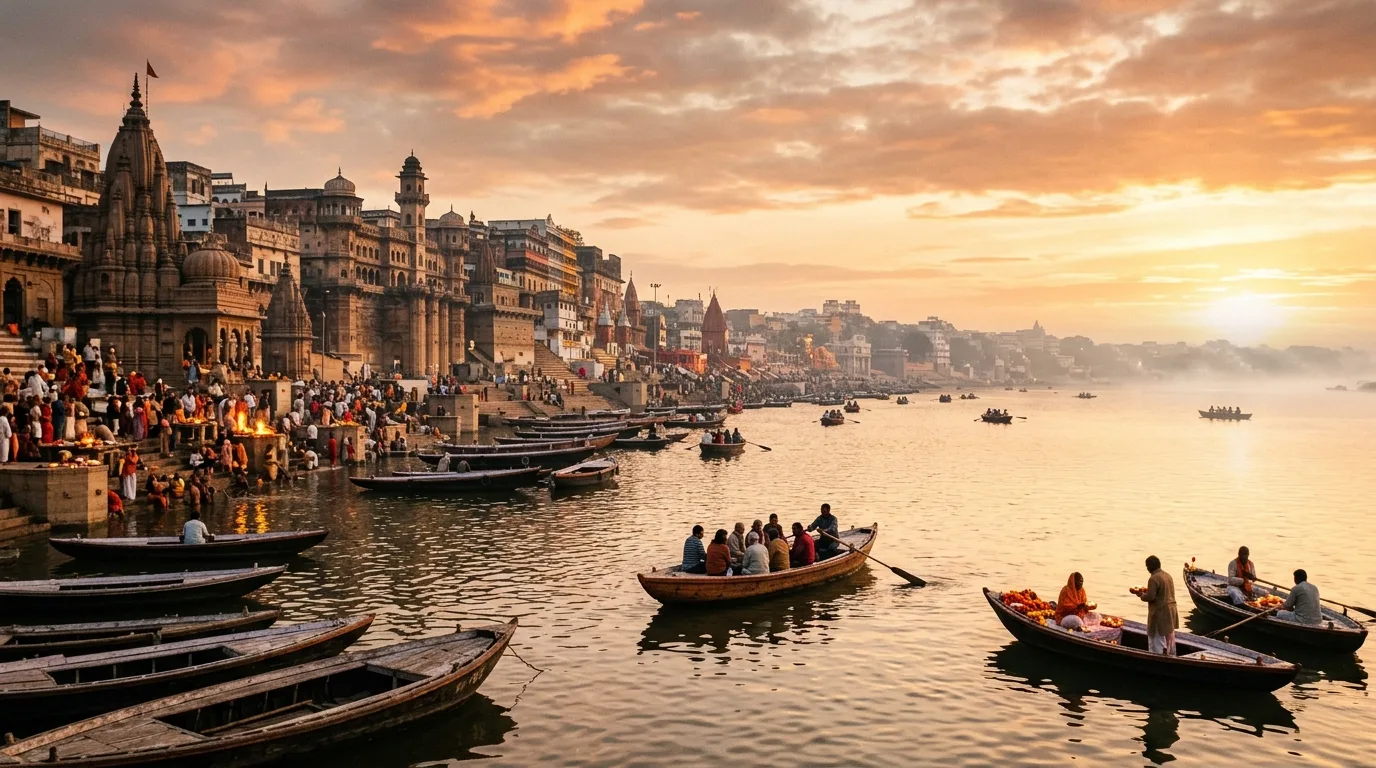
Winter in Banaras means thick river fog until nearly 9:00 AM, which completely ruins any long-range landscape photography you had planned for your fancy camera. Lean into it. The mist turns the docked wooden rowboats into ghostly silhouettes against a grey-white canvas, and the silhouette of pilgrims bathing in the freezing water looks like something out of a sixteenth-century miniature painting.
Prices for river transport fluctuate wildly during festival days when pilgrims flood the banks from neighboring districts. A private wooden rowboat from Assi Ghat to Manikarnika should cost roughly ₹400 to ₹600 for a two-hour morning stretch if you negotiate with a polite, firm voice in Hindi or broken English. Do not let anyone quote you ₹1500 for a shared motorboat; walk twenty paces down the steps and find an old rower whose knees ache just as much as yours do.
| Experience / Item | Realistic Local Price (₹) | Best Time to Go | Traveler Warning |
|---|---|---|---|
| Kulhad Chai | ₹10 - ₹15 | 6:00 AM | Watch out for boiling milk scalds |
| Kulhad Lassi (Blue Lassi) | ₹50 - ₹80 | 1:00 PM | Hard to find without a local guide |
| Wooden Rowboat (2 hours) | ₹400 - ₹600 | 5:30 AM | Ignore boatmen demanding tourist rates |
| Kachori Breakfast | ₹30 | 7:30 AM | Very spicy; keep bottled water handy |
Evening Aarti and Escaping the Human Wall
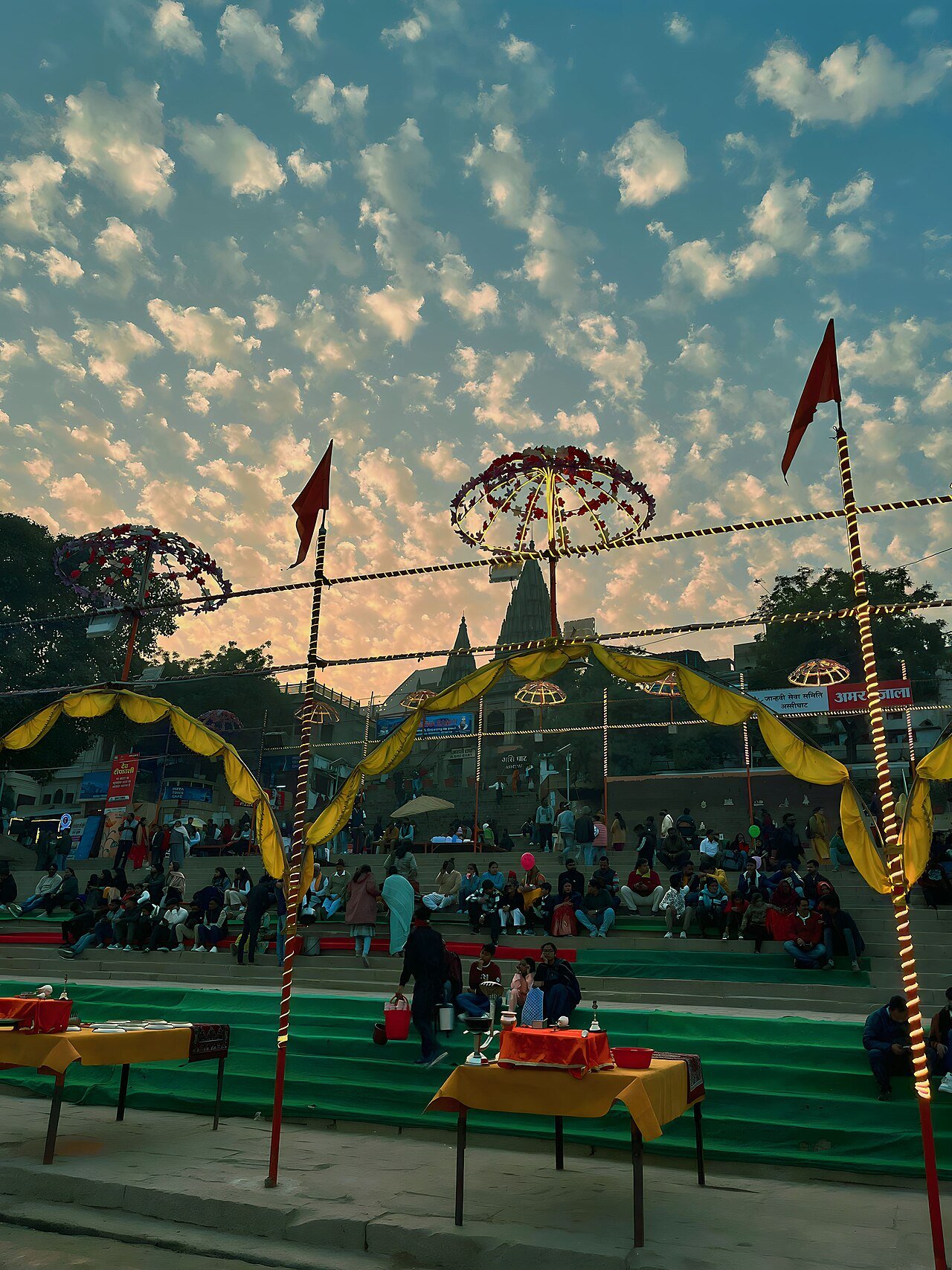
When evening falls, the riverfront transforms into a wall of sound and light that makes New Year's Eve in Times Square look calm. Thousands gather on the stone tiers of Dashashwamedh Ghat for the grand daily ritual, while thousands more cram onto motorboats bobbing dangerously close together on the dark water. If you hate being squished between strangers like a damp box of matches, do not stand on the main platform. Rent a small boat, stay fifty yards offshore, and watch the brass lamps swing in unison from the water.
The cold wind picks up the moment the sun drops below the horizon, and that wool jacket you cursed yourself for carrying all afternoon suddenly becomes your best friend. Keep your phone zipped securely inside an inner pocket; pickpocketing in dense festival crowds isn't common, but dropping your expensive device into ten feet of murky Ganga silt happens more often than anyone likes to admit.
Frequently Asked Questions
Do I need to buy tickets for Ram Navami processions in Varanasi?
No. All street processions, temple visits, and ghat gatherings are completely free and open to the public. Just show up and keep moving with the crowd.
What should I wear during winter in Banaras?
Wear layers. Mornings require a heavy jacket or fleece, afternoons warm up enough for a light cotton shirt, and nights drop close to single digits Celsius near the open river.
Is Blue Lassi Shop hard to find?
Yes. The lanes of Bengali Tola are a maze of identical brick walls and stray cows. Ask anyone for 'Kedar Ghat main lane' and look for the blue shop front with tourist photos.
How much should I tip boatmen during festivals?
Tipping isn't strictly mandatory, but handing over an extra ₹50 or ₹100 note for a cold morning row is appreciated since festival traffic exhausts the rowers.
Varanasi Travel Quick Reference: Timings, Costs & Essentials
Key verified facts for planning your visit to Varanasi — timings, transport costs, temple guidelines, and safety tips:
How much does a boat ride cost in Varanasi and how to book?
Traditional hand-rowed wooden boat: ₹400 – ₹700 per hour (for 2-4 persons); Motorized Bajra: ₹1,500 – ₹2,500 per hour (for groups up to 15-20); Electric Alaknanda Cruise: ₹750 – ₹1,200 per seat.
What are the exact Ganga Aarti timings at Dashashwamedh and Assi Ghat?
Morning Subah-e-Banaras at Assi Ghat begins at 05:00 AM (summer) / 05:45 AM (winter); Grand Evening Maha Aarti at Dashashwamedh Ghat begins at 07:00 PM (summer) / 06:00 PM (winter).
What is the dress code and entry fee for Kashi Vishwanath Temple?
Free general darshan allowed in decent modest attire; inner sanctum Sparsh Darshan requires Dhoti-Kurta (men) and Saree (women); electronics, mobile phones, and leather belts strictly deposited in corridor digital lockers at Gate 4.
When is the best time of year to visit Varanasi?
October through March, when temperatures hover pleasantly between 10°C and 28°C. Coincides with Dev Deepawali (24 November 2026, with over 1.2 million lamps) and Maha Shivratri (February/March).
How far is Varanasi Airport from the Ghats and how to reach the city?
Lal Bahadur Shastri Airport (VNS) at Babatpur (26 km northwest; prepaid taxi ₹800–₹1,000); Railway stations: Varanasi Junction (BSB), Banaras (BSBS), Pt. Deen Dayal Upadhyaya Junction (DDU, 18 km).
What are the most common tourist scams in Varanasi and how to avoid them?
Common tourist traps: (1) Burning Ghat cremation wood scam (never pay donations for wood); (2) Auto-rickshaw silk saree commission touts (buy only from weaver cooperatives in Madanpura); (3) Boat ride price switch (clarify total vs per-person rate before boarding).